How to Pick the Best Hardwood Floor for Your Home
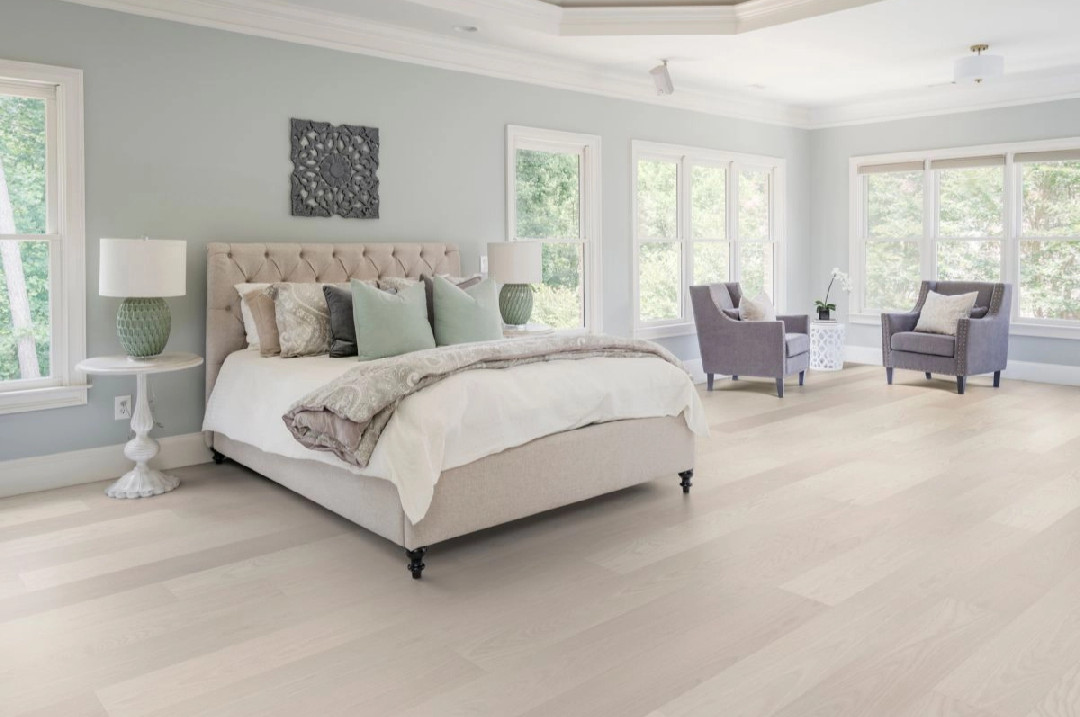
image source : flooringtitan.com
Choosing a hardwood floor sounds simple at first. You pick a color you like, find a price you can live with, and move on. Then you start seeing terms like solid, engineered, white oak, hickory, site-finished, matte, beveled edge, and wear layer, and suddenly a floor turns into a full research project.
The truth is, the best hardwood floor is not always the most expensive one, the hardest one, or the trendiest one on Instagram. The best floor is the one that fits the way your home is actually used. It should look right in your space, hold up to your daily life, work with your subfloor and climate, and still make sense five or ten years from now. That matters because hardwood still has strong buyer appeal. In NAHB survey reporting highlighted by NAR, hardwood flooring ranked among the home features that 80 percent or more of buyers call essential or desirable. That does not mean every wood floor automatically raises value, but it does tell you that hardwood remains a feature people notice and want.
Start with your real life, not the showroom sample
Before you think about species or stain color, think about the room itself. Is this a quiet guest bedroom, a busy family room, a kitchen where chairs drag across the floor every day, or a home with dogs, kids, wet shoes, and constant traffic? That question matters more than most people realize.
A gorgeous floor that looks perfect in a showroom can become annoying fast if it shows every scratch, every crumb, and every paw mark in your house. On the other hand, a floor that is slightly less dramatic on day one can be the better long-term choice if it ages gracefully. Hardwood is durable, but not every hardwood floor lives the same life. NWFA notes that wood selection should start with where the floor will be placed and how the household lives, and also points buyers to hardness as a useful indicator of how well a species can stand up to indentations.
Decide between solid and engineered first
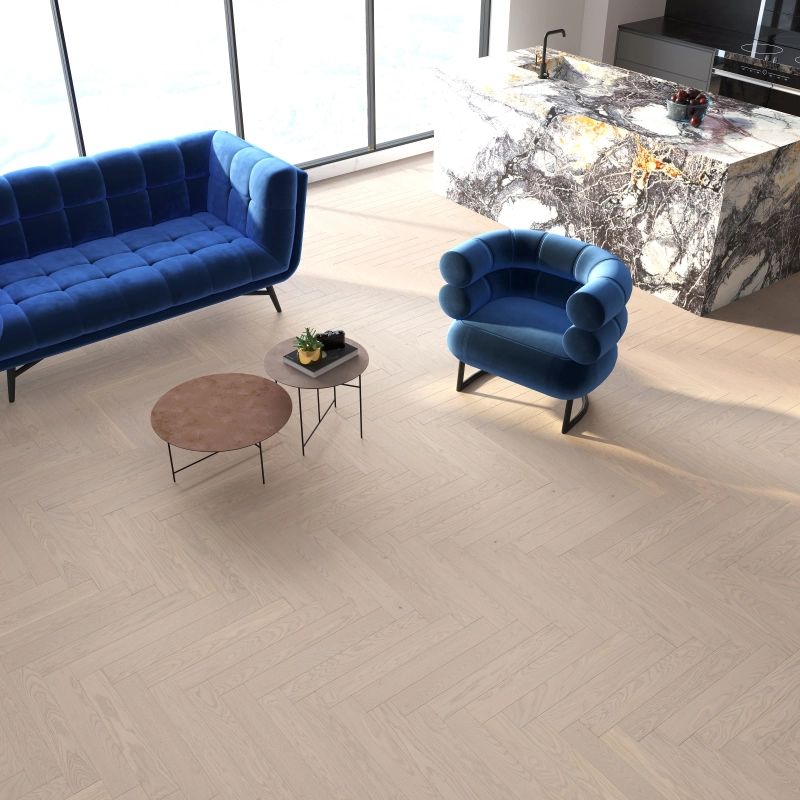
image source : flooringtitan.com
This is one of the biggest decisions, and it clears up a lot of the confusion.
Solid hardwood is exactly what it sounds like: one piece of wood from top to bottom. Engineered hardwood is also real wood, but it is built in layers, with real wood on the top and multiple wood veneers or slats arranged in opposing directions underneath. That layered construction is why engineered hardwood is often chosen when conditions are a little more demanding. NWFA defines both clearly and notes that engineered wood is real wood from top to bottom, just made differently.
So which one is better? Neither is universally better. Solid hardwood is a classic choice and is often preferred when you want maximum sanding and refinishing potential over the long haul. Engineered hardwood is often the more practical choice in basements or areas where dimensional stability matters more, and NWFA notes that while engineered wood can sometimes be sanded and refinished, it cannot always be done as many times as solid wood.
A simple way to think about it is this: if you are flooring a traditional main level over a stable wood subfloor and you want the most old-school, long-term option, solid hardwood makes a lot of sense. If you are dealing with a basement, slab, condo, or a house where environmental movement is more of a concern, engineered hardwood often makes the smarter fit. That is not a compromise. In many homes, it is the better answer.
Pick the species based on function first, style second
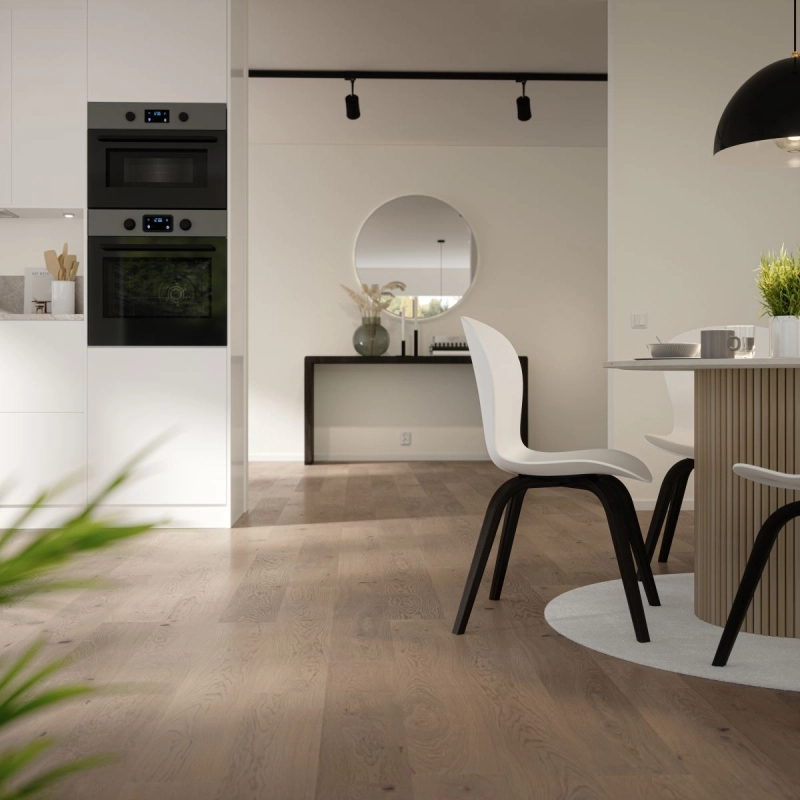
image source : flooringtitan.com
A lot of homeowners pick species by color alone. That is understandable, but it is not enough. Species affects durability, grain character, and the overall personality of the floor.
Oak remains the safe, versatile standard for a reason. NWFA says white and red oak are still market leaders in flooring trends, and the U.S. Forest Service notes that white oak has long been valued because it is tough, strong, and durable. If you want a floor that feels timeless, adapts well to many design styles, and does not box you into a very specific look, oak is hard to beat.
Maple is worth a serious look if you want a cleaner, quieter grain pattern and a wood that is known for being tough, hard, heavy, and strong. The U.S. Forest Service specifically describes sugar maple that way and notes that it is commonly used for flooring. In real homes, maple can be a smart choice for people who want a more understated look than oak’s open grain.
Hickory is another strong option for households that want character and toughness. The Forest Service describes shagbark hickory as tough, heavy, hard, and resilient, and says it is well suited to uses that must resist impact and stress, including flooring. In plain English, hickory is for people who want a floor with more movement, more variation, and a little more visual energy.
If you are unsure, white oak is usually the easiest recommendation. It sits comfortably between traditional and modern, it is widely available, and it has the kind of proven durability that makes it a dependable default rather than a boring one.
Use hardness as a guide, not the whole answer
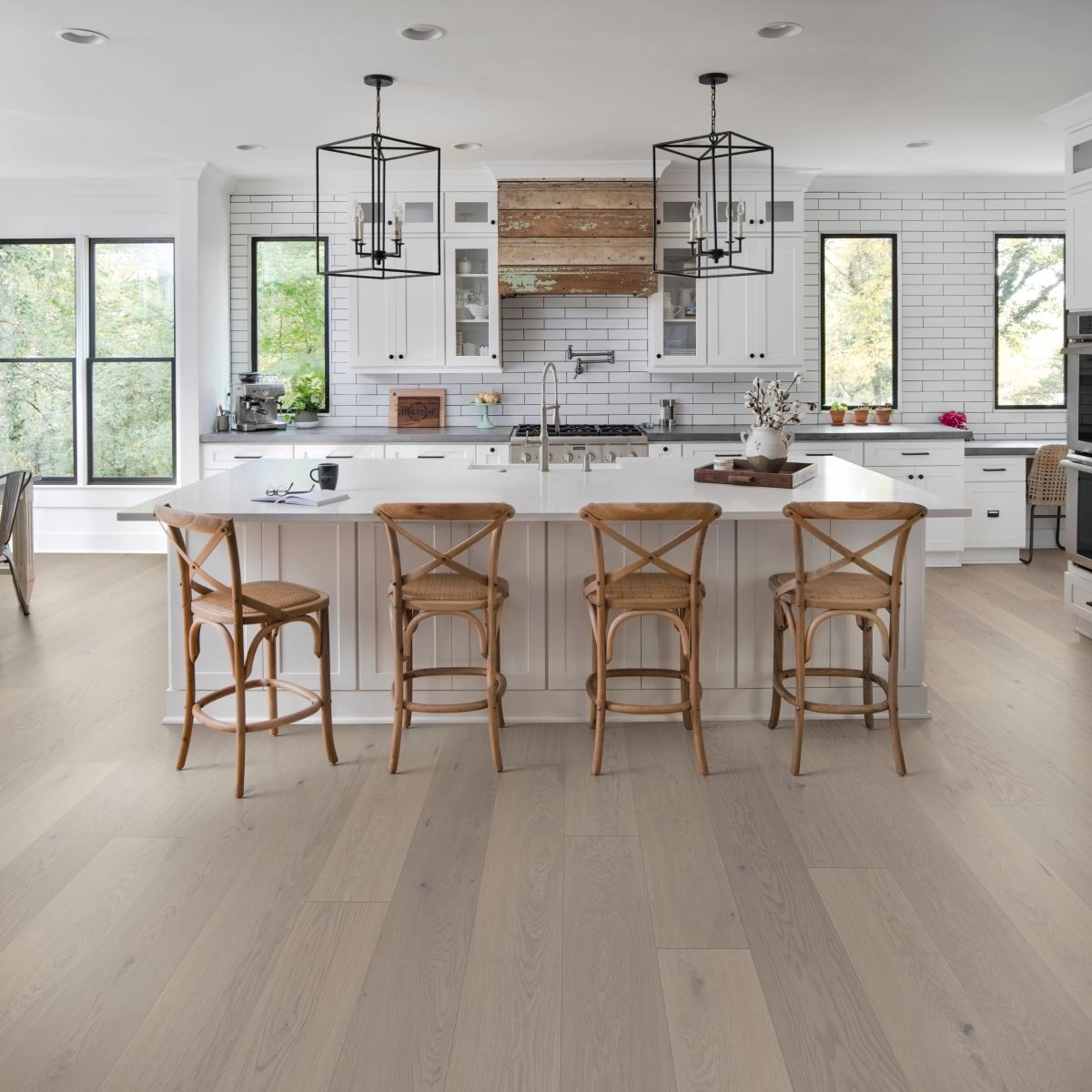
image source : flooringtitan.com
Many buyers get stuck on hardness ratings. Hardness matters, but it should not become an obsession.
NWFA points to the Janka scale as a general indicator of how well a species can withstand indentations. That makes it useful, especially in homes with pets, children, or lots of traffic. But Janka is not the whole story. Floor performance also depends on board width, finish, indoor humidity, installation quality, and how well the floor fits the space. A harder floor can still disappoint if it is installed poorly or exposed to unstable conditions.
So yes, compare hardness. Just do not let one number choose the whole floor for you.
Width and style change the entire feel of the room
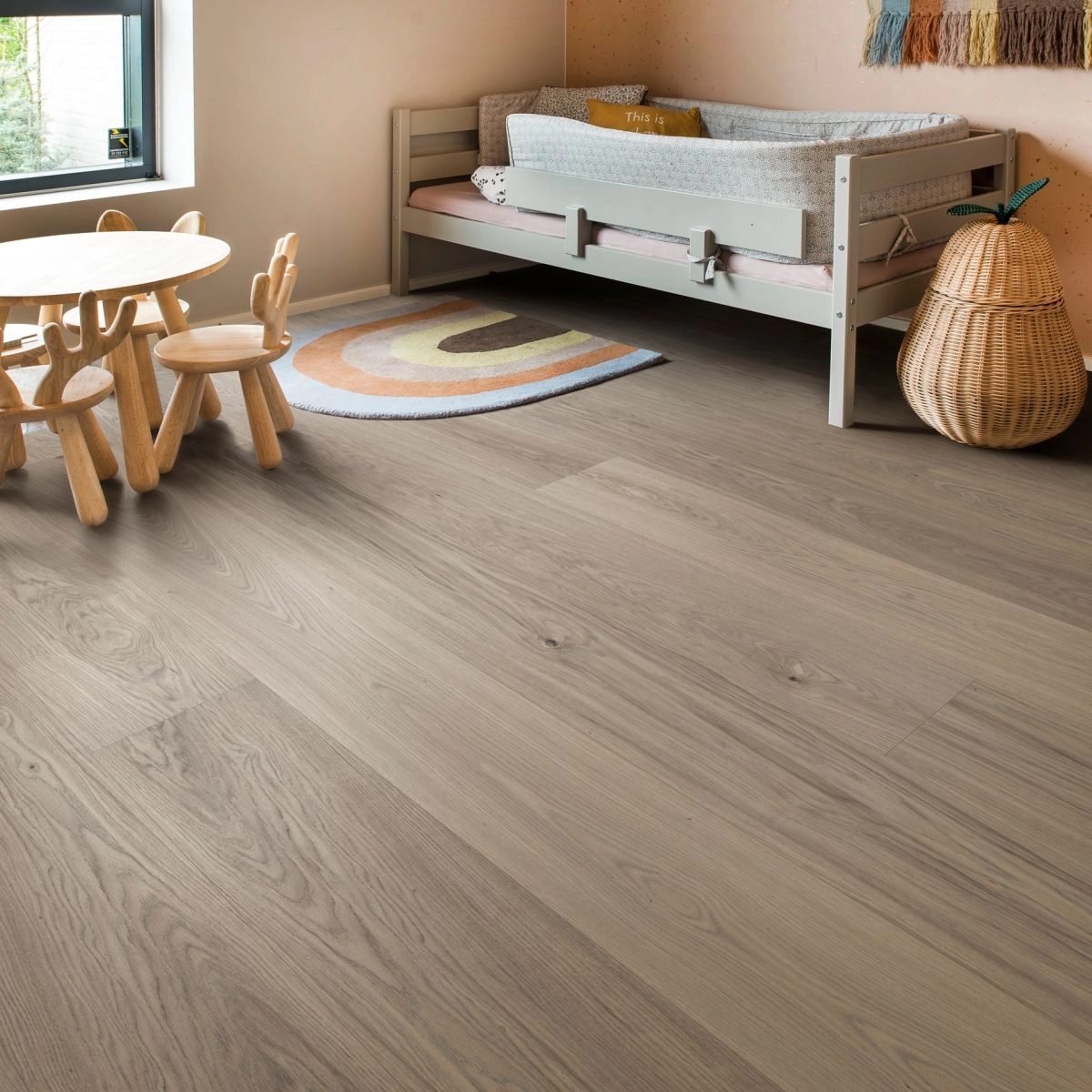
image source : flooringtitan.com
People often underestimate how much plank width changes the look of a home. It changes more than stain color in many cases.
NWFA notes that strip flooring is less than 3 inches wide and often makes a room appear larger, while plank flooring is 3 inches or wider and often creates a more casual look. That sounds simple, but it is a helpful design rule. Narrower boards usually feel more traditional and visually busy. Wider boards feel calmer, broader, and more architectural.
This is where many flooring decisions go wrong. Someone falls in love with a species and a stain but ignores board width, then wonders why the finished room feels different than expected. If your home leans classic, narrower or medium-width boards often feel right. If your home is more modern, transitional, or open-plan, wider planks usually feel more natural.
The finish you choose will affect daily happiness more than you think
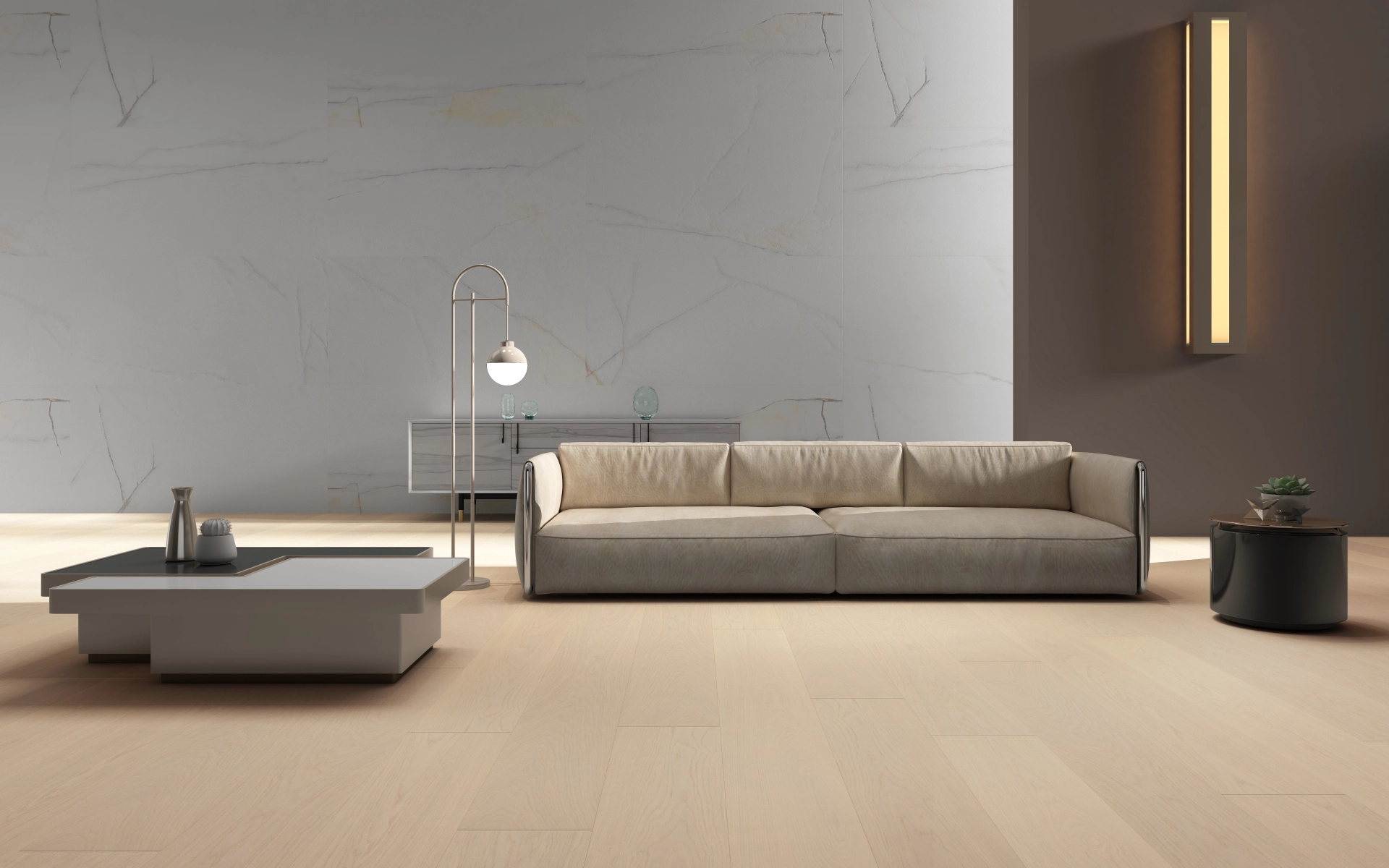
image source : flooringtitan.com
Most people spend too much time choosing color and not enough time choosing finish. That is a mistake because the finish controls how the floor behaves in everyday life.
NWFA explains that all wood floors require finish and that different finish types offer different performance characteristics. Water-based finishes are normally clear, very durable, and dry quickly. Oil-based finishes bring a warmer amber tone and are also very durable. Factory-finished flooring is ready to walk on immediately after installation, while site-finished flooring offers the most customization but requires drying time in the home.
Sheen matters just as much. NWFA makes a very practical point here: the less sheen, the less you will notice small scratches and normal wear. That is why matte and satin floors are usually easier to live with than high-gloss floors, especially in busy homes. Gloss can look dramatic on day one, but it is less forgiving. For most households, a low-sheen finish is the better long-term decision.
Moisture and climate matter more than trends
image source : flooringtitan.com
This is the part buyers skip, and it is often the part that causes problems later.
Wood reacts to its environment. NWFA states plainly that in humid conditions wood gains moisture and can swell, while in dry conditions it loses moisture and can shrink. That can lead to cupping, gaps, or splits if the environment changes too much. Their general recommendation is to keep the home between 60 and 80 degrees Fahrenheit and between 30 and 50 percent humidity year-round.
That means the best floor for your home is partly a climate decision. A floor that performs beautifully in one house may be a headache in another if the indoor environment is not stable. This is also why installation quality matters so much. If a homeowner spends weeks debating stain color but ignores subfloor moisture, acclimation, and indoor humidity, they are focusing on the least important part of the purchase.
Do not ignore product safety and material standards
image source : flooringtitan.com
If you are buying engineered flooring or any product that uses composite materials in the core, it is smart to check what is actually inside it.
The EPA states that certain composite wood products sold in the United States, including hardwood plywood, MDF, and particleboard in finished goods, must be labeled as TSCA Title VI compliant. That label exists to address formaldehyde emissions. For a homeowner, the takeaway is simple: if you are comparing engineered products, especially lower-cost ones, look for compliant labeling and do not treat all cores as equal.
This is one of those details that does not make a beautiful Instagram post, but it is exactly the kind of thing that separates a smart purchase from a rushed one.
What you should ask before you buy
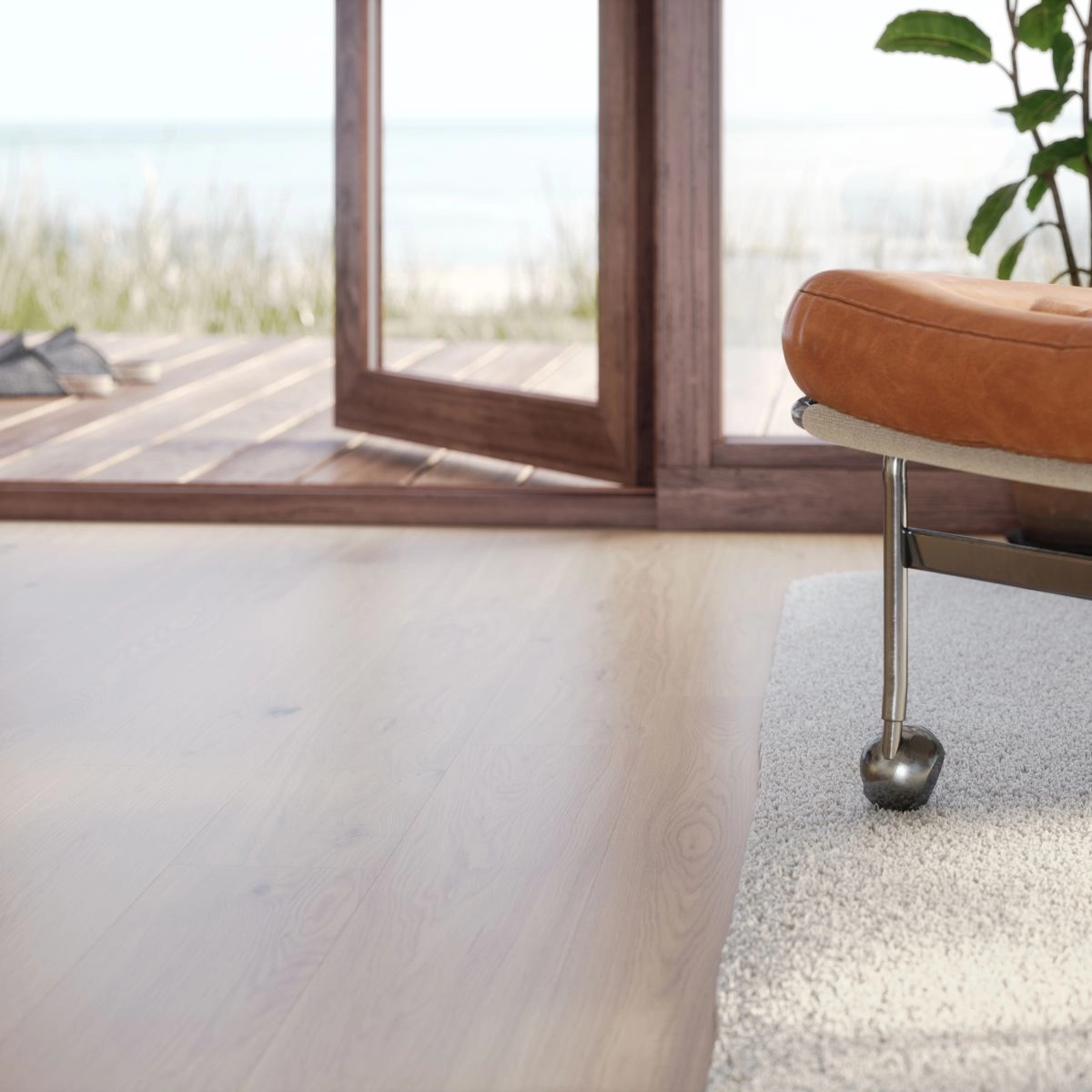
image source : flooringtitan.com
By the time you are down to two or three flooring options, the right questions become very practical. Ask whether the product is solid or engineered. Ask where it is appropriate to install. Ask what the finish is. Ask how the floor should be cleaned. Ask whether the engineered product can be refinished later and how many times the manufacturer expects that to be possible. Ask what humidity range the product expects in normal use. Ask what the warranty excludes, because those exclusions often tell the real story.
And maybe most important, ask whether the floor fits your house, not just whether it photographs well.
The best hardwood floor is the one you will still like after real life happens
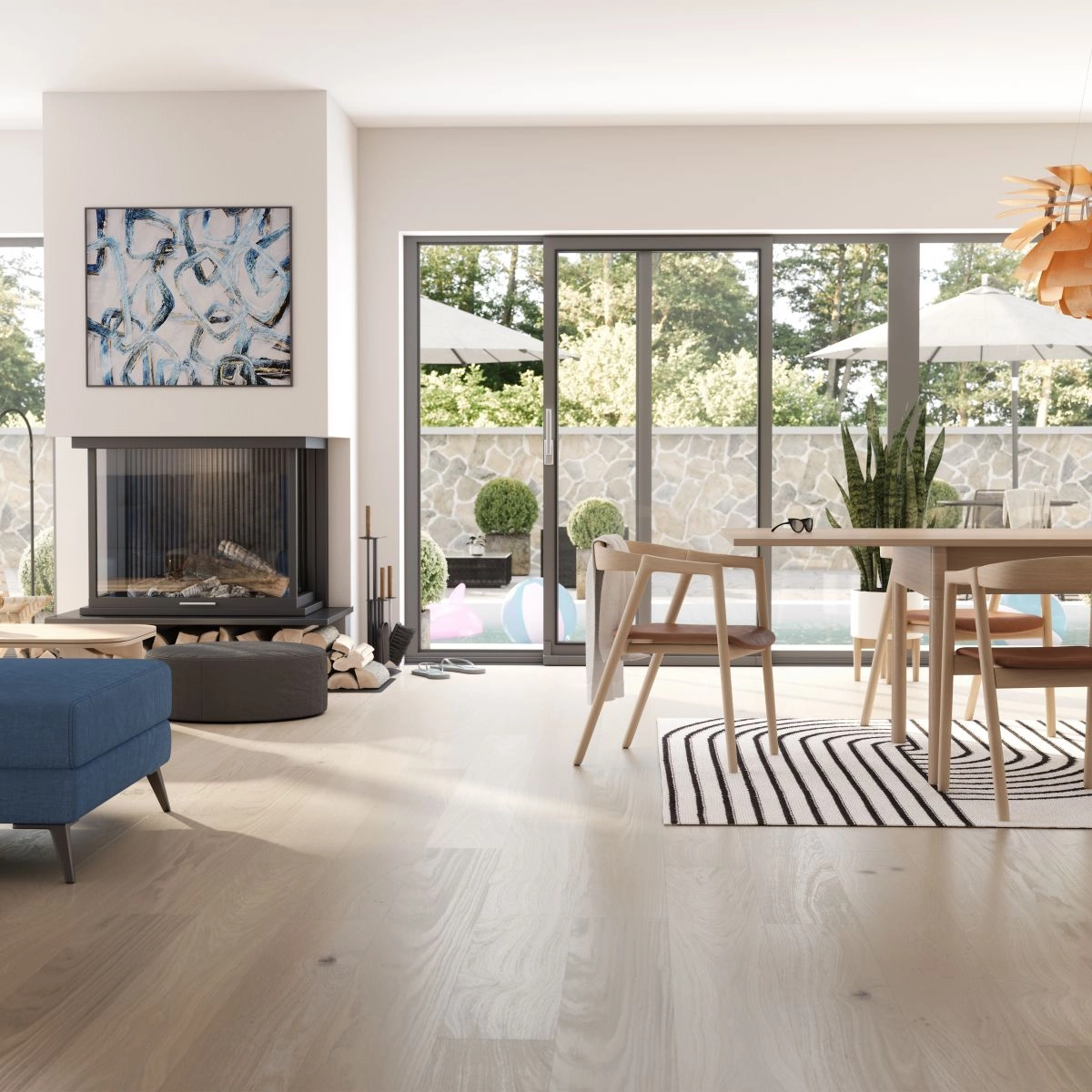
image source : flooringtitan.com
A hardwood floor is not just a finish material. It becomes the visual foundation of the house. You walk on it every day. You clean it, scratch it, spill on it, rearrange furniture on it, and live on it. That is why the best choice is almost never the flashiest one.
For most homes, the safest path is this: choose a proven species, choose the right construction for the level of the house, stay realistic about traffic, go with a lower-sheen finish, and respect moisture conditions. If you do that, you are far more likely to end up with a floor that still looks right years from now, not just the day it is installed.
Article by: Flooring Titan, USA